RecommendMail Facebook LinkedIn
Efficient PIC Wafer Testing
Using the UFO Probe® Card for testing Photonic Integrated Circuits (PICs) – the chips of the future.
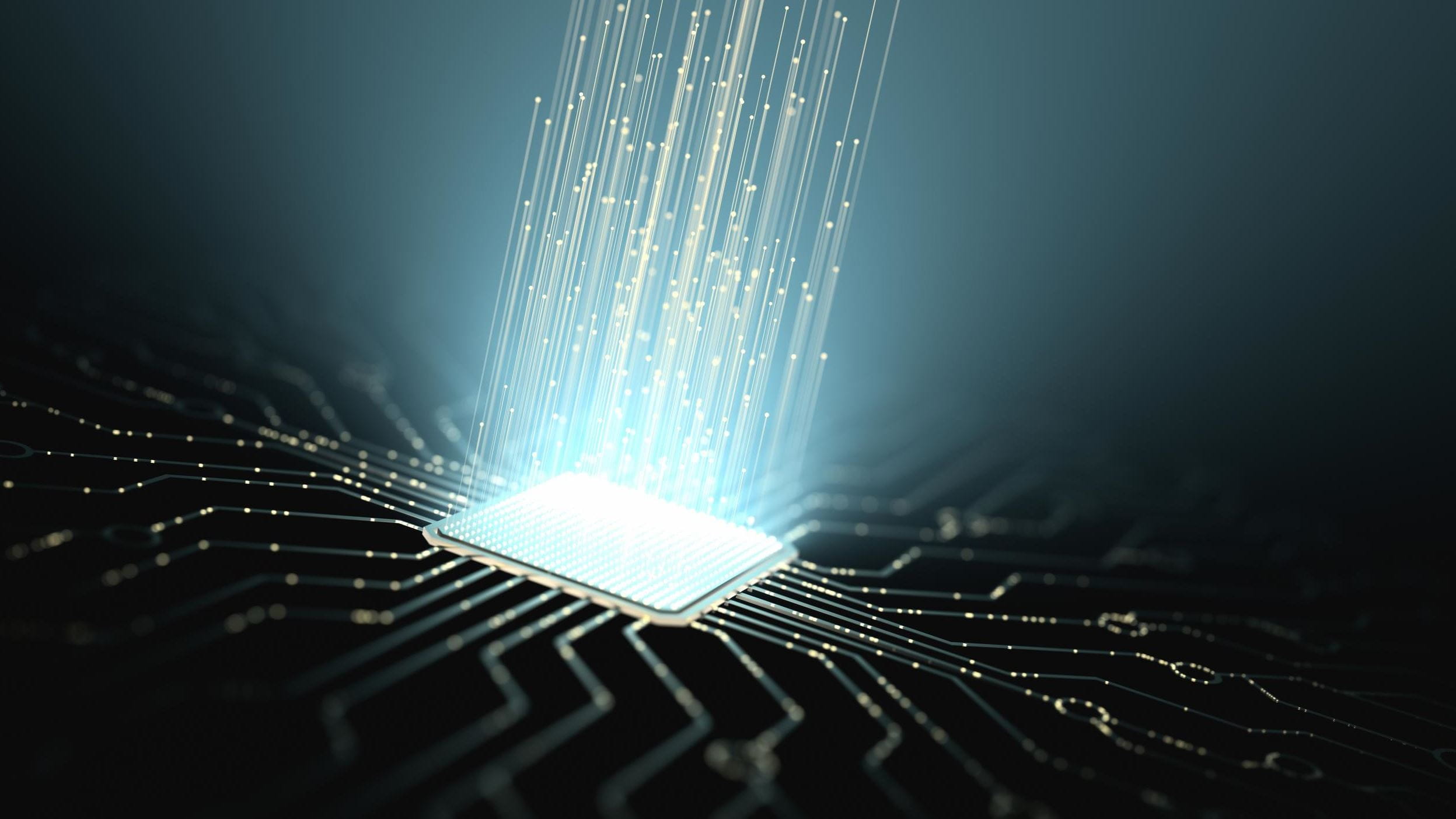
Photonic Integrated Circuits (PICs) are the chips of the future. They combine optical and electrical functionalities on a single chip. This so-called “integrated photonics” enables cutting-edge applications such as artificial intelligence (AI) and quantum computing. As the core component of millions of optical transceivers, it supports the rapidly increasing volume of data transmission and processing in data centers worldwide.
Because every functional chip counts
Increasing chip complexity and the goal of reducing costs through economies of scale are driving the demand for fast, automated, and parallelized wafer-level testing. To ensure that these tests are reliable and reproducible, they should ideally be standardized and performed in a uniform test environment. This is the only way to achieve the high yields and low scrap rates required by modern silicon photonics fabs.
The needs of chip manufacturers
- Increased chip complexity and integration density (SoC) through monolithic or heterogeneous integration of optics and electronics
- Economies of scale for cost optimization
- High-throughput test solutions for high-volume production
- High-yield mass production to reduce scrap and losses
- Automated test solutions
- Standardized tests
Challenges in Silicon Photonics Testing
- High-throughput test solutions (suitable for fab requirements) that perform electronic-photonics testing at the wafer level, with high parallelism and as much automation as possible
- Functional testing of PICs at an early stage in the process is critical for higher yields
- Standardization of the test environment and procedures is necessary to enable consistent and predictable testing of silicon photonics.
Free webinar recording: Watch it now and learn more!

“Just the Right PIC – How Advanced Test Concepts Enable Fast PIC Wafer-Level Testing!”
In this exclusive webinar recording, Tobias Gnausch (Jenoptik) and Sylwester Latkowski (TU Eindhoven) provide valuable insights into the following topics:
- Characterization vs. Testing: What are the differences, and why are both indispensable?
- Standardization as a foundation: How uniform test standards form the basis for high-volume production.
- Optoelectronic test methods: Practical approaches that allow you to significantly increase the efficiency of your wafer production
- Reliable testing without “active alignment”: Innovative techniques that eliminate the need for time-consuming alignments while guaranteeing the highest measurement accuracy.
Speed up the world
Custom-designed for a variety of applications
Unlike traditional test solutions, which use separate optical and electrical probe cards, Jenoptik combines an electrical and an optical test module into a single, compact test card. This test card is custom-designed and combines Jenoptik’s expertise in optics and photonics with the established probe technology of leading manufacturers.
Depending on your requirements, the UFO Probe® Card is configured and manufactured to meet your specific needs. Here are three examples of ProbeCard configurations we have already implemented. Contact us to discuss your individual requirements.
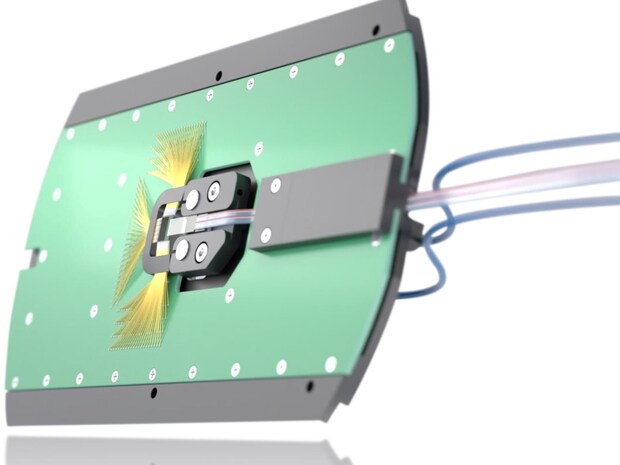
UFO Probe® Cantilever in Eurocard Format
- For vertically emitting PICs
- Monolithically integrated optical module with standardized or custom inputs and outputs
- Cantilever probe technology with several hundred probes
- Standard probe interface: Eurocard format
- Integrated distance sensor.
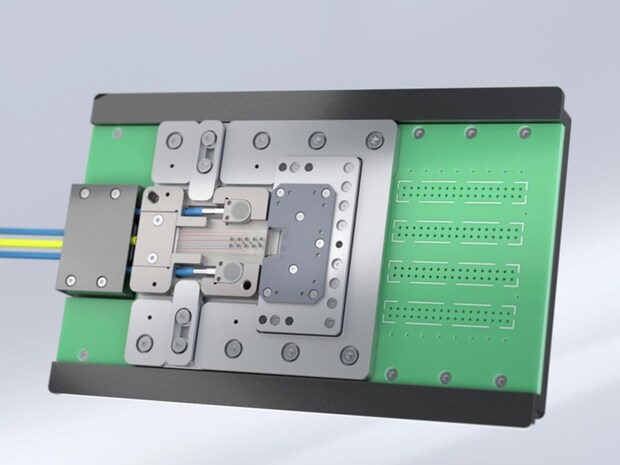
UFO Probe® Vertical in Eurocard format
General operating principle similar to that of the UFO Probe Cantilever, but particularly suitable for…
- High probe counts of up to tens of thousands of probes and beyond
- Extremely small probe sizes and spacings down to >40 µm
- Testing of pads and bumps
- Suitable for multi-DUT (multi-chip) and high-frequency (HF) testing.
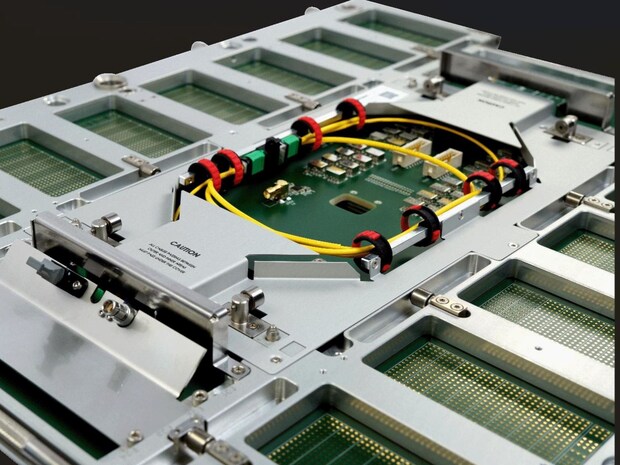
UFO Probe® Vertical in ATE format
- Direct-docking design
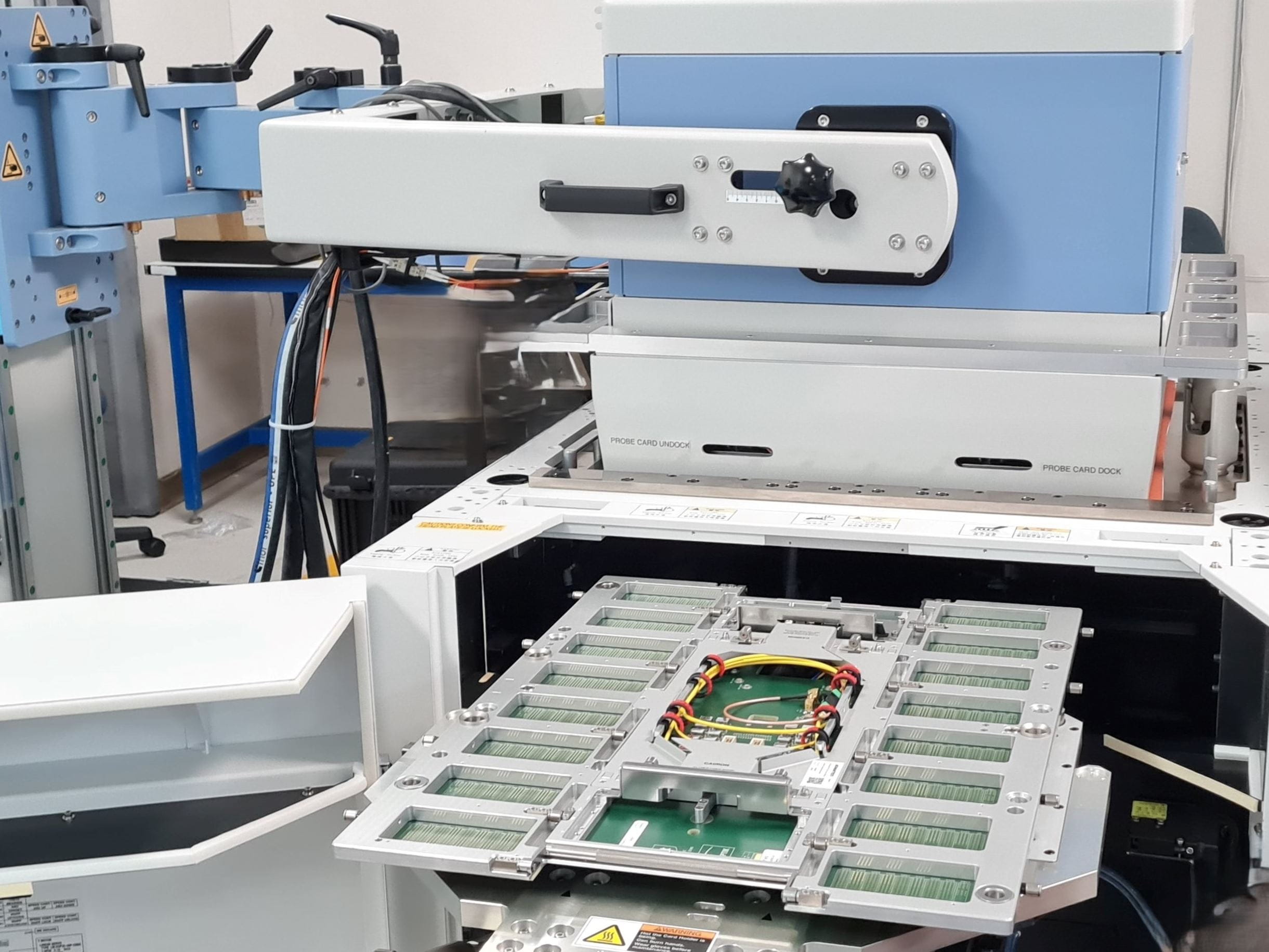
- Interface for system integration into ATE (automated test equipment) platforms, such as Advantest V93000 or Teradyne UltraFlex
- For vertical-emitting PICs
- Ideal for a high number of electrical and optical contacts, as well as for multi-DUT testing.
Customized for your success
Each UFO Probe® Card is customized to the individual requirements and the respective wafer layout and is available with both cantilever and vertical needle technology. Check out the specifications for more details.
All benefits of the Probe Card Technology on one view
Progress
Being ahead: The innovative 2-in-1 test solution expands the PIC ecosystem and enables high-volume production of high-performance chips.
Innovation
For the first time: Combines an optical and an electrical test module in just one probe card for parallel qualification – without the need for active alignment.
Quality
Identify known-good-dies: Have complete information about the functionalities of PICs in early stage of wafer production to reduce costs in the following production steps.
Integration
Use what is there: Probe card operates on existing standard IC wafer probers or test equipment.
Efficiency
Reduced test time: The alignment step is only required once per wafer, not once per PIC.
Flexibility
One platform - many options: The UFO-Probe® is suitable for many applications and can be customized to meet your needs.
Probe card applications now and in the future



Easy integration into existing IC test systems and ATE platforms
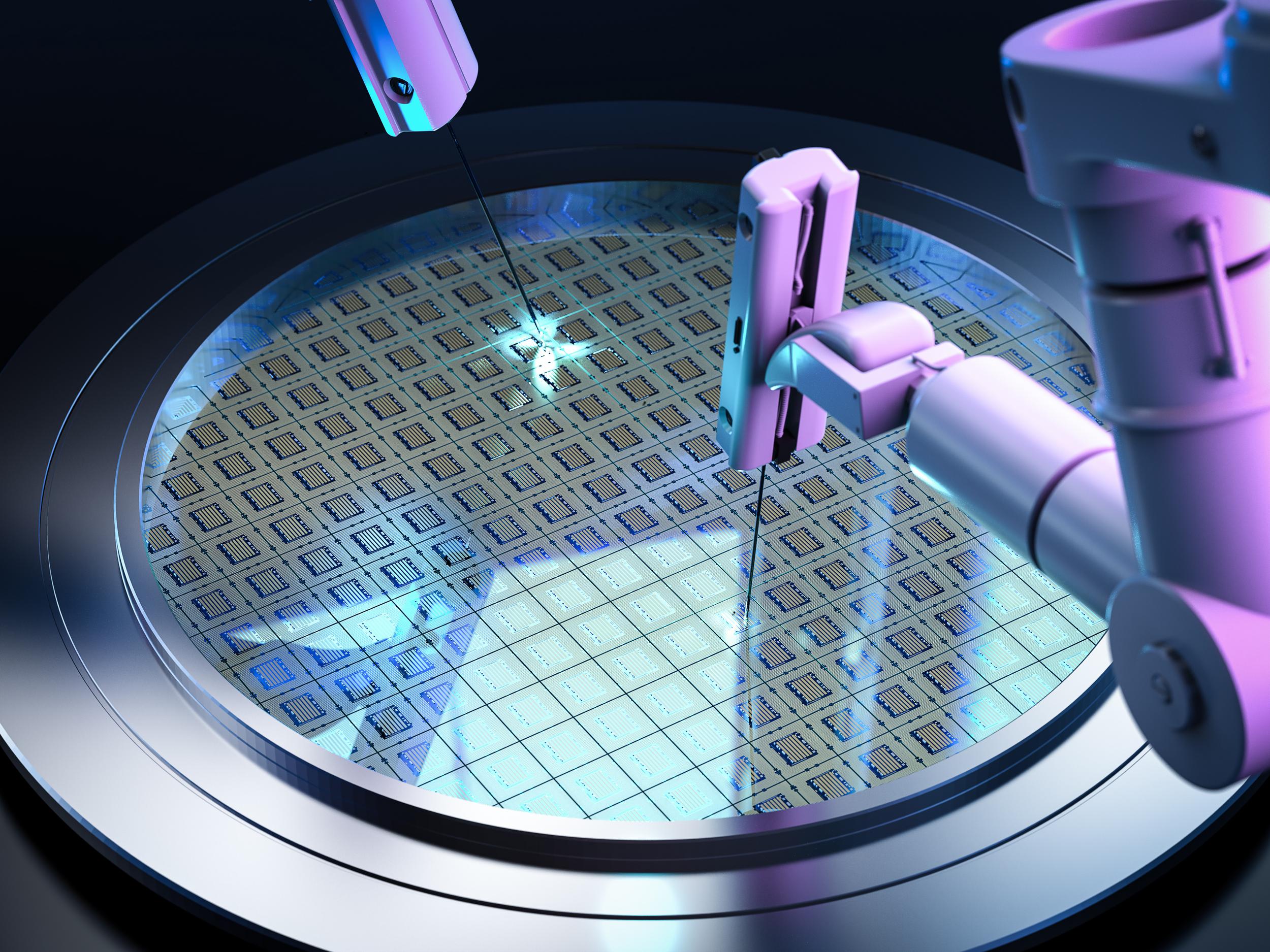
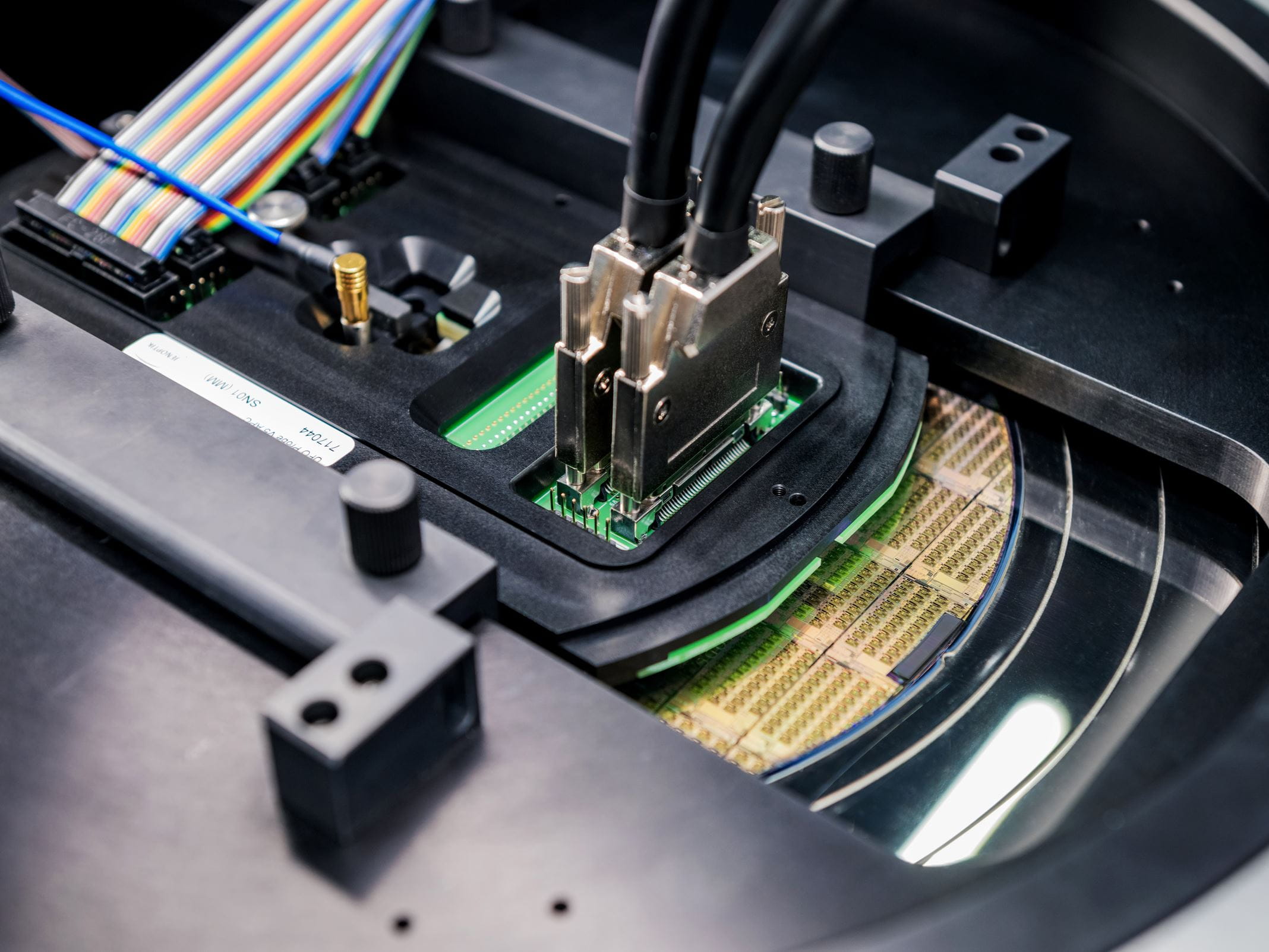
In wafer-level testing, the probe card serves as an interface between the semiconductor wafer and the test system. It ensures precise electrical contact as well as reliable coupling and decoupling of optical signals, thereby guaranteeing signal integrity.
Thanks to its modular design, the UFO Probe Card can be easily integrated into existing IC test equipment, minimizing technical adjustments and optimizing workflows.
ATE system interface for platform-specific integration
For the automated testing of wafers using so-called direct-docking solutions, UFO Probe® technology has been implemented in a test card specifically designed for this purpose. This meets the mechanical and electrical requirements of major ATE platforms, such as Advantest V93000 or Teradyne UltraFlex. The connectors align thousands of channels with the probe card’s contact points via customer-specific signal assignments and mechanical docking precision.
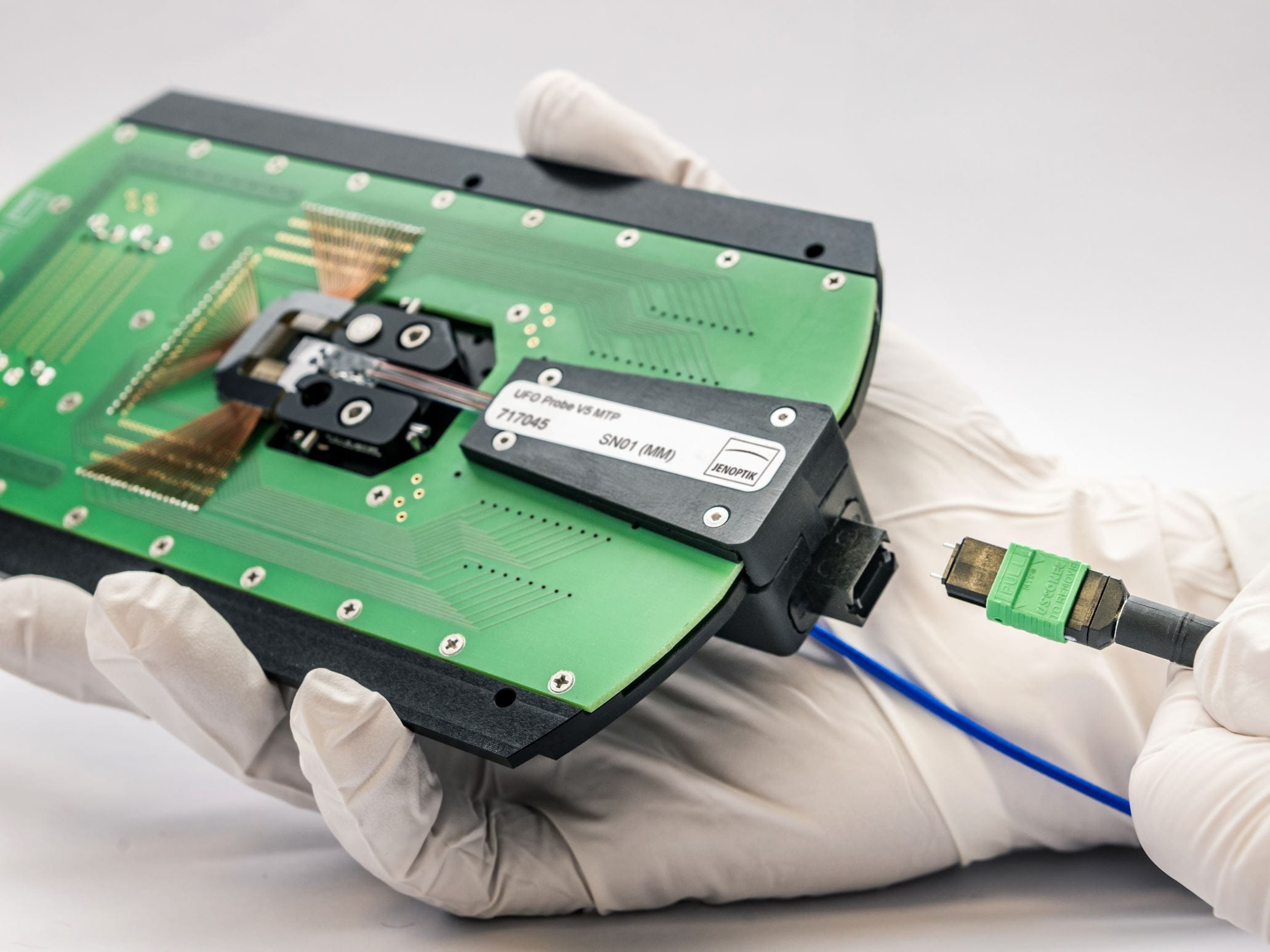
Combination of novel optical concept and proven needle technology
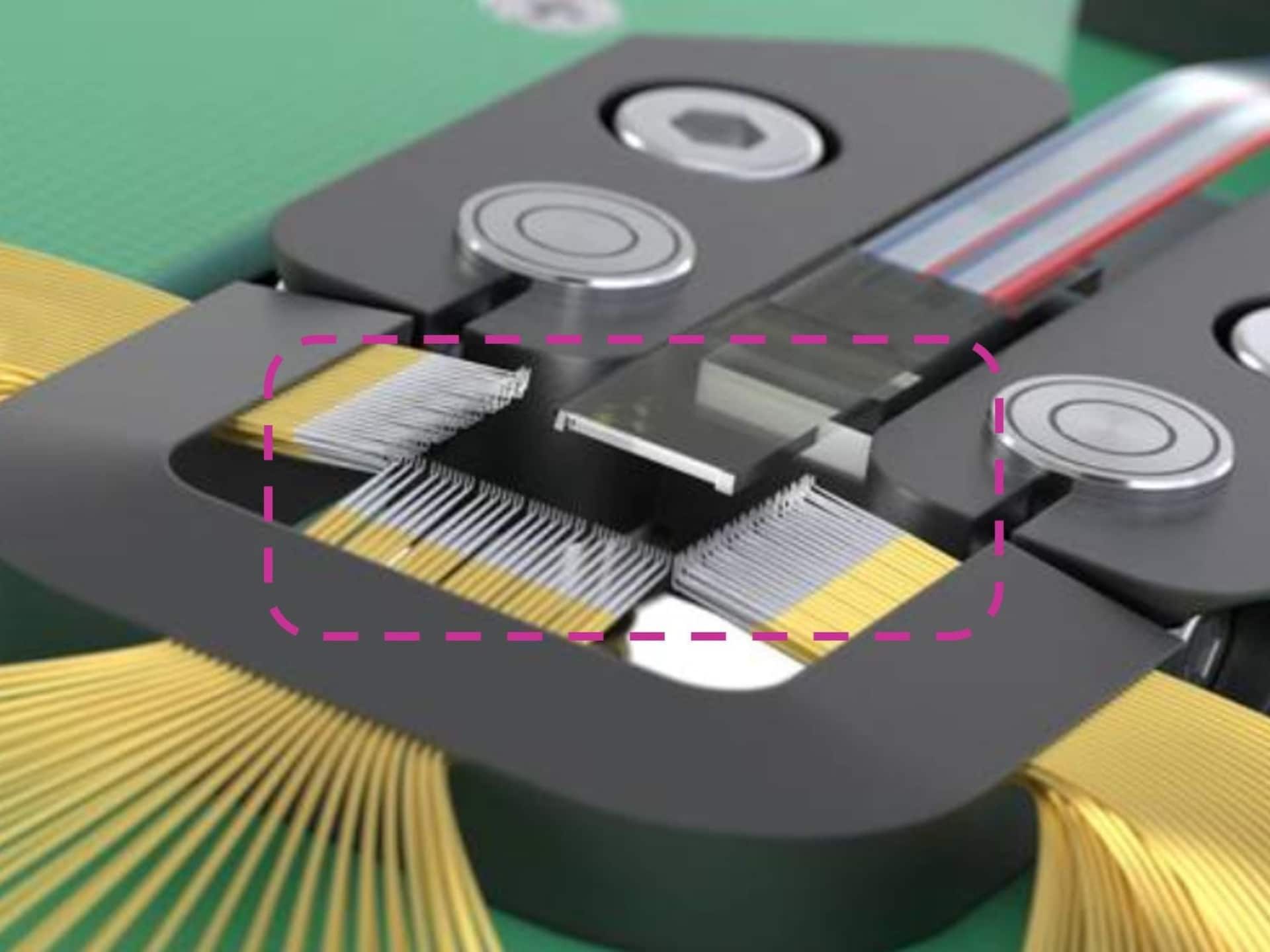
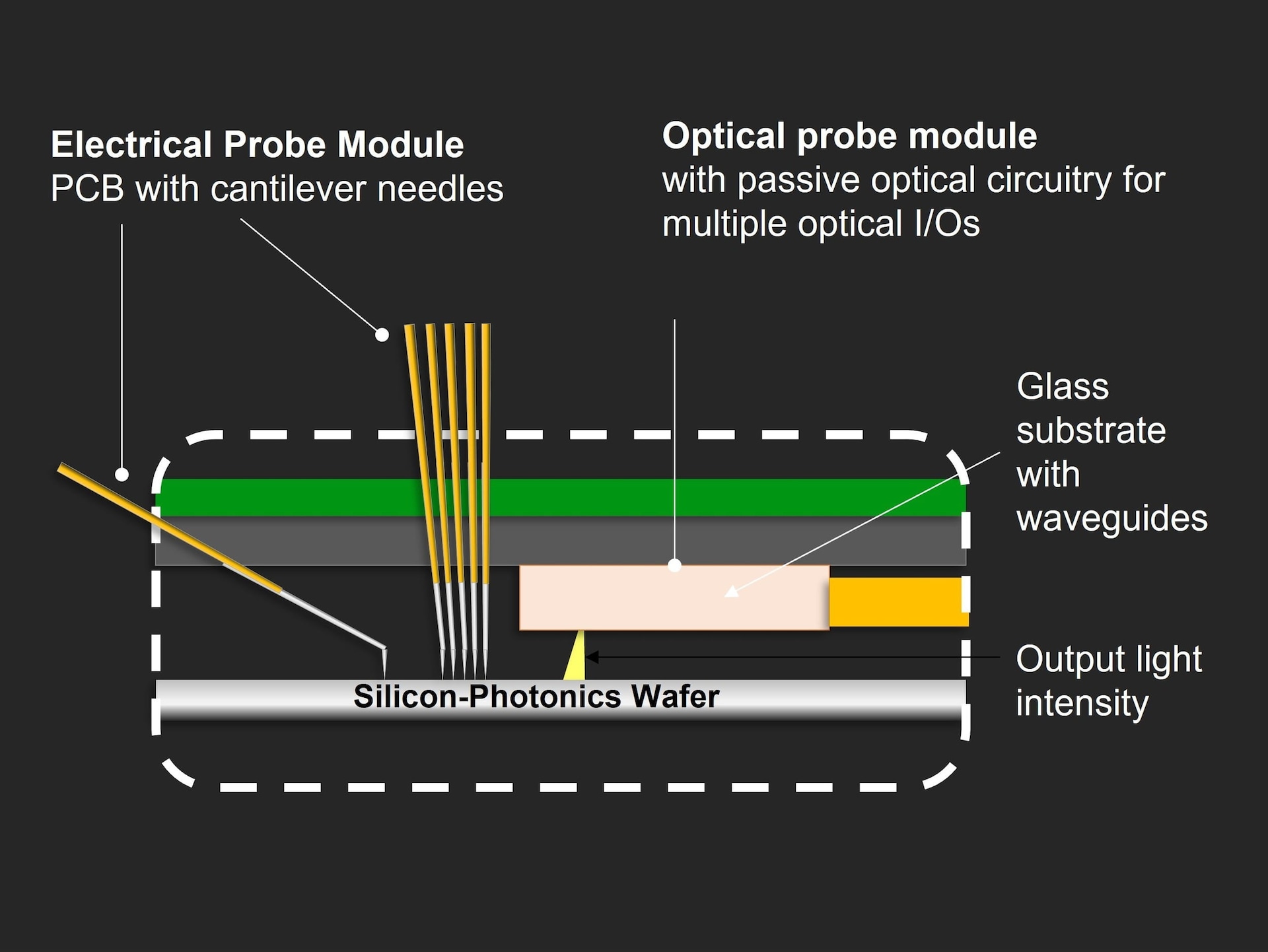
- Monolithically integrated optical module
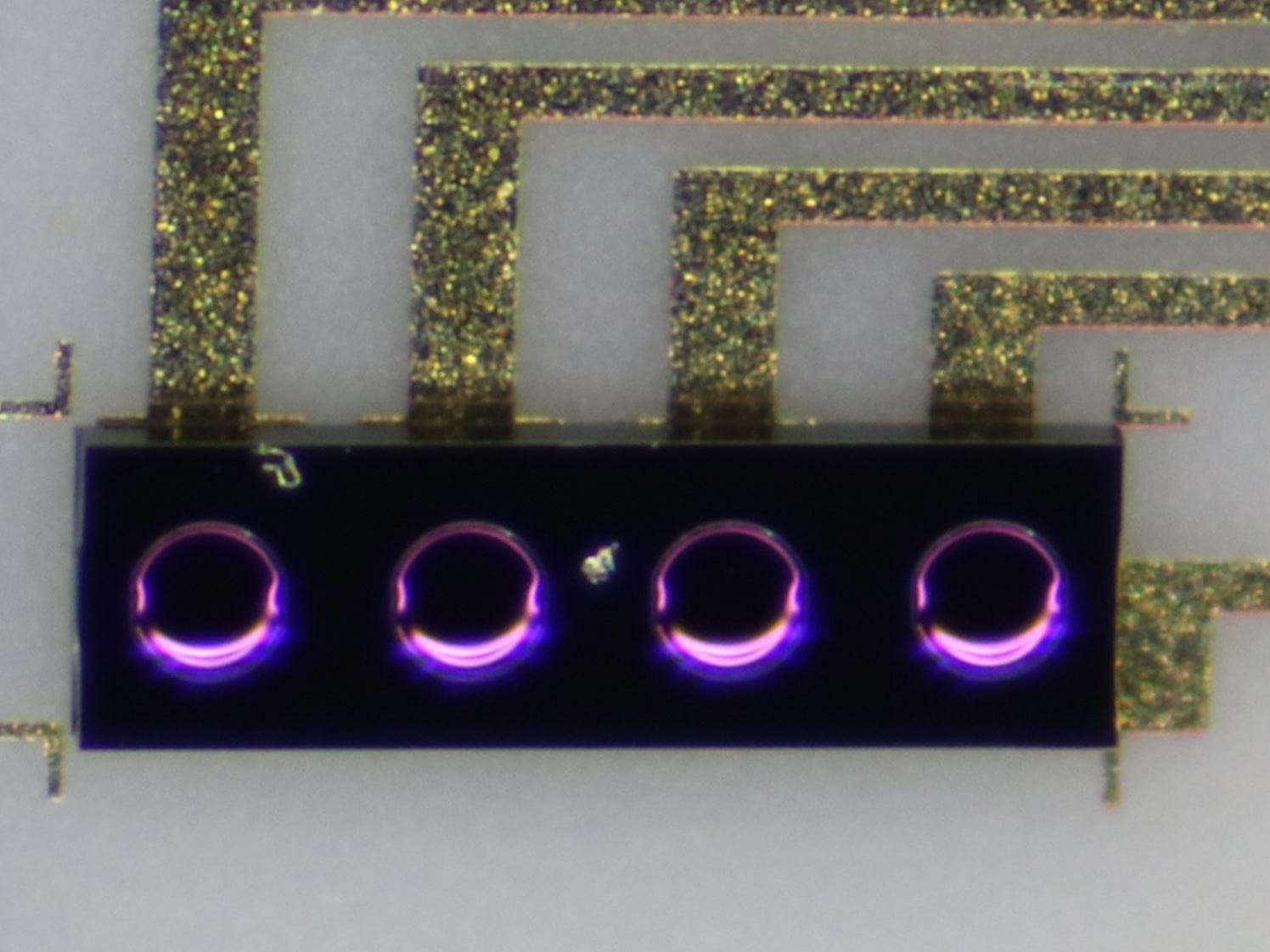
- Alignment-insensitive optical coupling for vertically emitting PICs (compensates for probe tolerances)
- Simultaneous bonding of the chip’s optical and electrical interfaces
- Use of field-proven probe technologies
- Standard interfaces to testers and wafer probers
Technical details of the UFO Probe® Card
| Specifications | Current generation | Future generations |
|---|---|---|
Component to be tested | Electronic and photonic integrated circuit (EPIC); optical transceivers for data transmission and telecommunications applications | EPIC for transceivers, photodiodes, |
Electric needle technology | Cantilever and vertical | Cantilever, vertical/advanced |
Optical coupling principle DUT | Vertical coupling | Vertical coupling |
Number of optical inputs/outputs (OI/OO) | Up to 32 or more | <200 |
Pitch OI/OO | 127 μm, 250 μm, flexible for >250 μm | flexible |
Layout configuration of OI/OO arrays | Linear arrangement with same direction of inputs/outputs | Configurable to own needs |
Coupling angle | 0° and 11.6° standard, up to 20° customized | 0° - 20° |
Supported wavelength | 1260 - 1625 nm (O/ L-band) | VIS to NIR (U-band) |
Measurement of insertion loss | Repeatability: ~ 0.3 dB | Repeatability target: 0.1 dB |
RF measurement | Up to 110 GHz, depending on needle technology | GHz |
Interfaces | Eurocard format; ATE* | Eurocard format; |
Building on an existing and established IC testing ecosystem
Testing optical and electrical functionality is a critical factor in wafer manufacturing. Especially in high-volume production, it is essential to keep both test and setup times short while maintaining the highest possible yield to remain cost-effective. Here, the UFO Probe®Card offers a clever solution that leverages established IC test infrastructure developed over decades.Expand testing capacity or transition testing equipment to PIC

Your partner in PIC testing
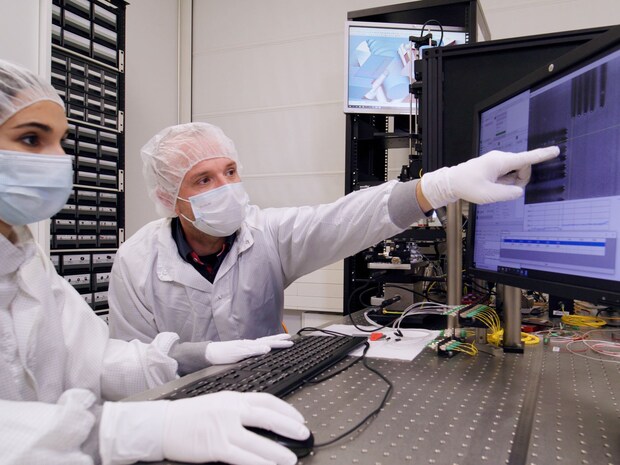
Jenoptik has profound expertise and know-how in micro-optics and optics and we are a competent and valuable partner to the semiconductor industry for many years. We know and understand the challenges of our customers and combine these with our technical experience and knowledge to create innovative solutions, such as the UFO Probe®Card. The necessary skills and the continuous development of technologies is just one aspect that we pursue with one goal: Moving you forward.
High-Performance from A to Z – our competencies:
- Design: Optical module and general electrical and optical probe card card
- Manufacturing and supply chain management
- Micro-assembly and alignment of optical and electrical modules
- Optical test and verification in lab: customized test rig
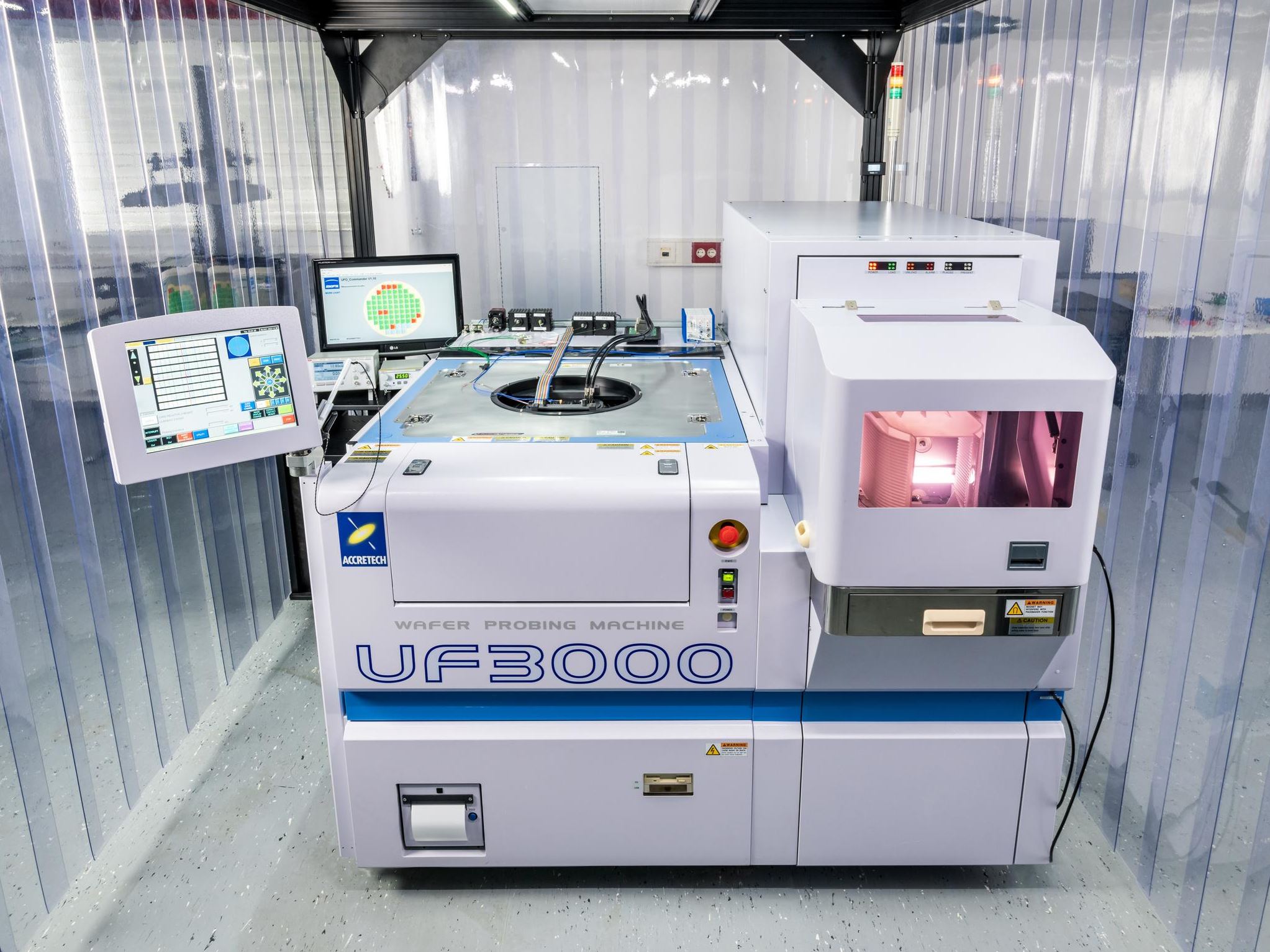
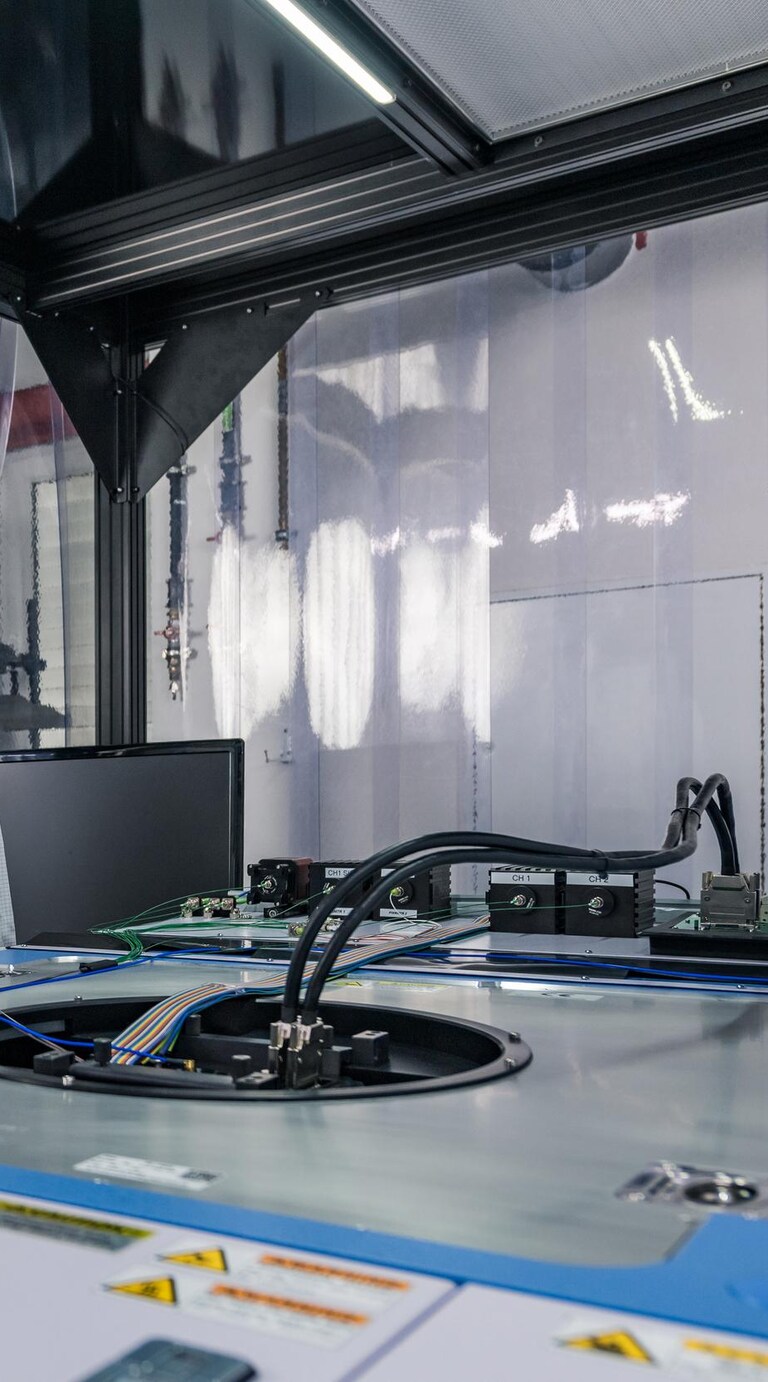
- Test under manufacturing conditions: Accretech UF3000 Prober

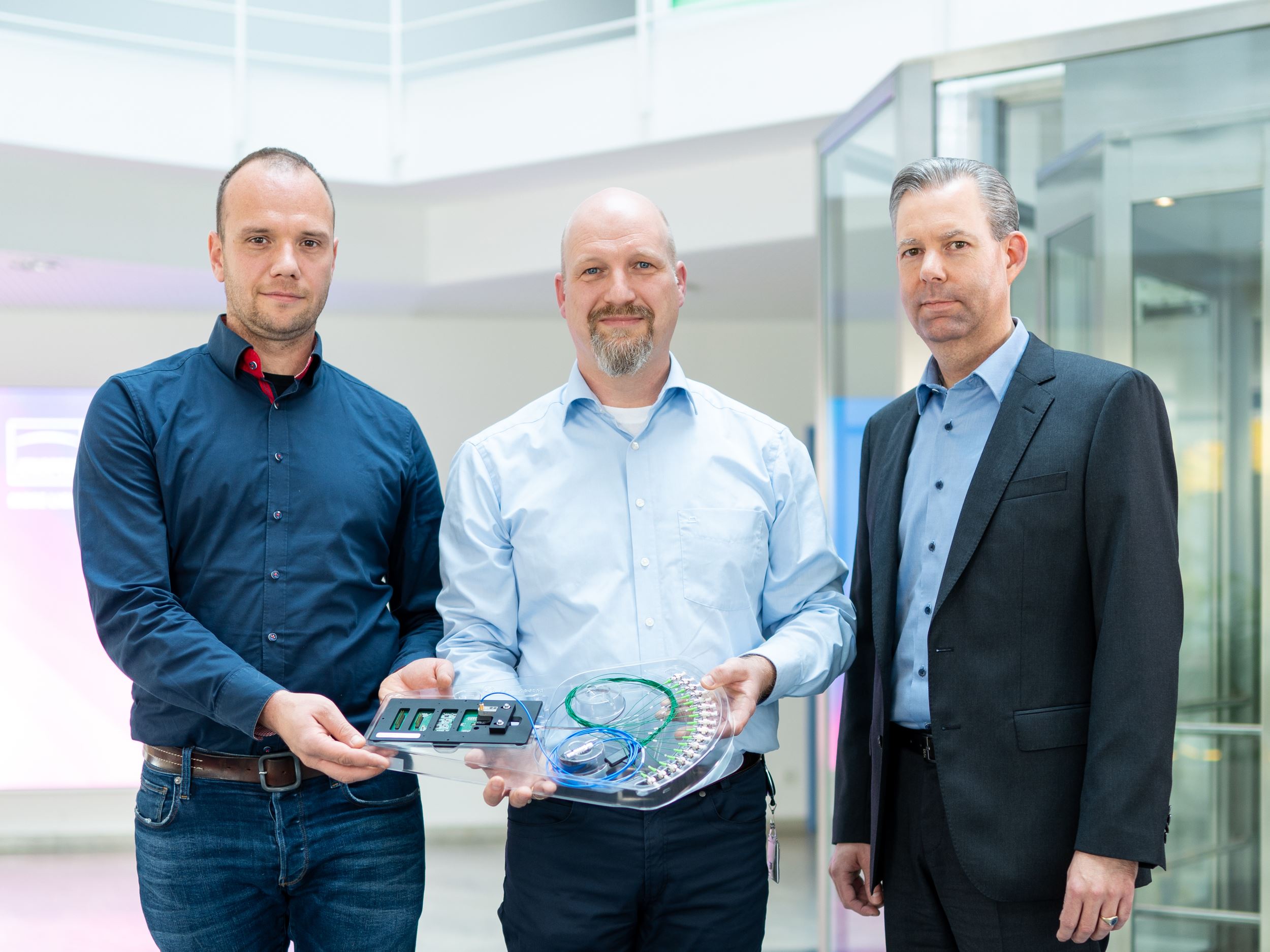
Awarded! Thuringia Innovation Award 2022 for UFO Probe® card
Jenoptik was awarded the Thuringia Innovation Award 2022 in the "Industry & Materials" category on November 30, 2022 in Weimar, Thuringia for its novel opto-electronic probe card for testing PIC wafers. Not quite 100 applications were received by STIFT Thüringen this year. Jenoptik convinced the expert jury with its well-thought-out approach to solving the increasing demand for photonic technologies in the electronics and semiconductor industry.